
Legend:
Home Maintenance Checklist: What to Do & When to Do It

Taking care of your home is a lot of work, and it can be difficult to know where to start.
Regular home maintenance will extend the life of your appliances, and it can help you catch minor issues before they become expensive problems.
The best way to stay on top of home maintenance is to download our checklist, which will guide you through monthly, seasonal and annual maintenance tasks. It's a great idea to add these tasks to your phone calendar and set reminders so you always remember to take care of important upkeep.
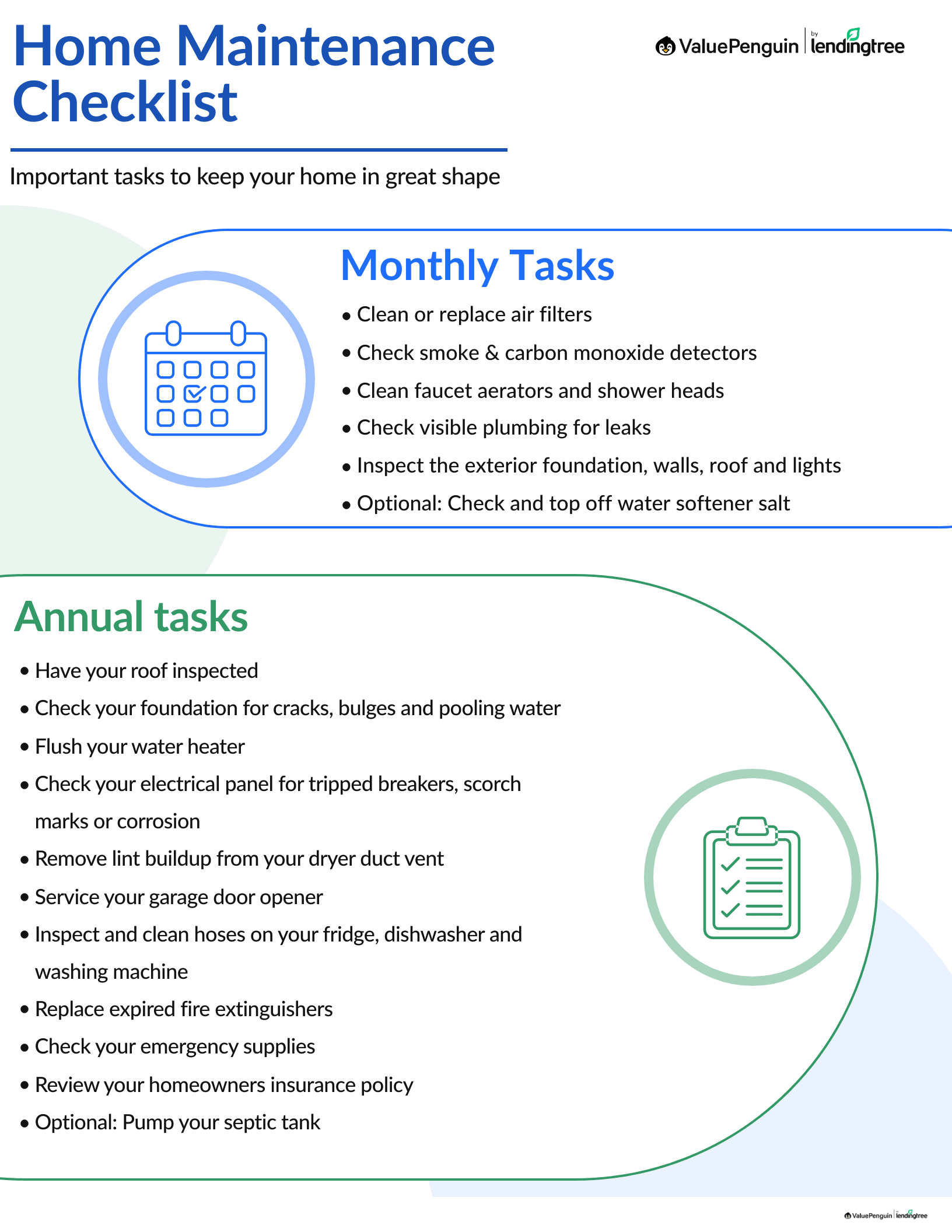

Monthly home maintenance checklist
There are six tasks you should complete each month to help maintain your home and keep everything running smoothly.

1: Clean or replace air conditioning or furnace filters, vacuum air vents and heat registers
Clean filters, vents and registers improve air quality and help your HVAC system run efficiently. You should change your filters every month or two, especially if you have allergies or pets.
Consider a "subscribe and save" program that automatically delivers air filters to your home, which can help you remember to change them out.

2: Check smoke alarms, carbon monoxide detectors and fire extinguishers
It's important to check these safety elements each month to protect your home against major fire damage and carbon monoxide poisoning.
- For smoke alarms and carbon monoxide detectors, press the “test” button and replace the batteries if needed.
- For fire extinguishers, make sure the pressure gauge is in the green and there are no signs of damage.
3: Clean garbage disposal and range hood filter
Cleaning your garbage disposal and hood filter regularly will help extend the life of your appliances.
- To clean the garbage disposal, grind ice cubes and citrus peels or a baking soda and vinegar mix to remove built-up food.
- To clean the range hood filter, soak it in a degreasing solution or run it through the dishwasher.
4: Clean faucet aerators and shower heads
Over time, mineral deposits build up and clog faucet aerators and shower heads. This can affect your water pressure and lead to mold and mildew growth. To clean them, simply soak them overnight in vinegar and gently scrub with an old toothbrush.

5: Check visible plumbing for leaks
Regularly checking for plumbing leaks can help prevent major water damage in your home. You should look under sinks and around toilets and appliances for drips or water stains monthly. This can also help you avoid costly repair bills.
Insurance companies typically cover leaks, but only if you report them immediately. So if your sink has been leaking for three months and you didn't notice it, you'll have to pay for any damage it caused.
6: Inspect the exterior of your home
Once a month, walk around your property to check for early signs of damage.
- Inspect your roof from the ground, keeping an eye out for missing, cracked or curling shingles.
- Inspect the foundation and exterior walls for cracks. Look for horizontal cracks, bulges and pooled water. Minor vertical cracks are common, but you should call a professional if you see larger or widening cracks.
- Look for signs of drainage issues, such as puddles or erosion. This may mean you have gutter issues or need to add material to help water run away from your home.
- Check exterior lights and motion detectors, and replace any burnt-out bulbs.
Optional: Check and top off water softener salt
If you have a water softener, you should regularly check the salt levels to ensure it runs efficiently and to keep mineral deposits from clogging your pipes. The salt should be at least half full and a few inches above the water level.
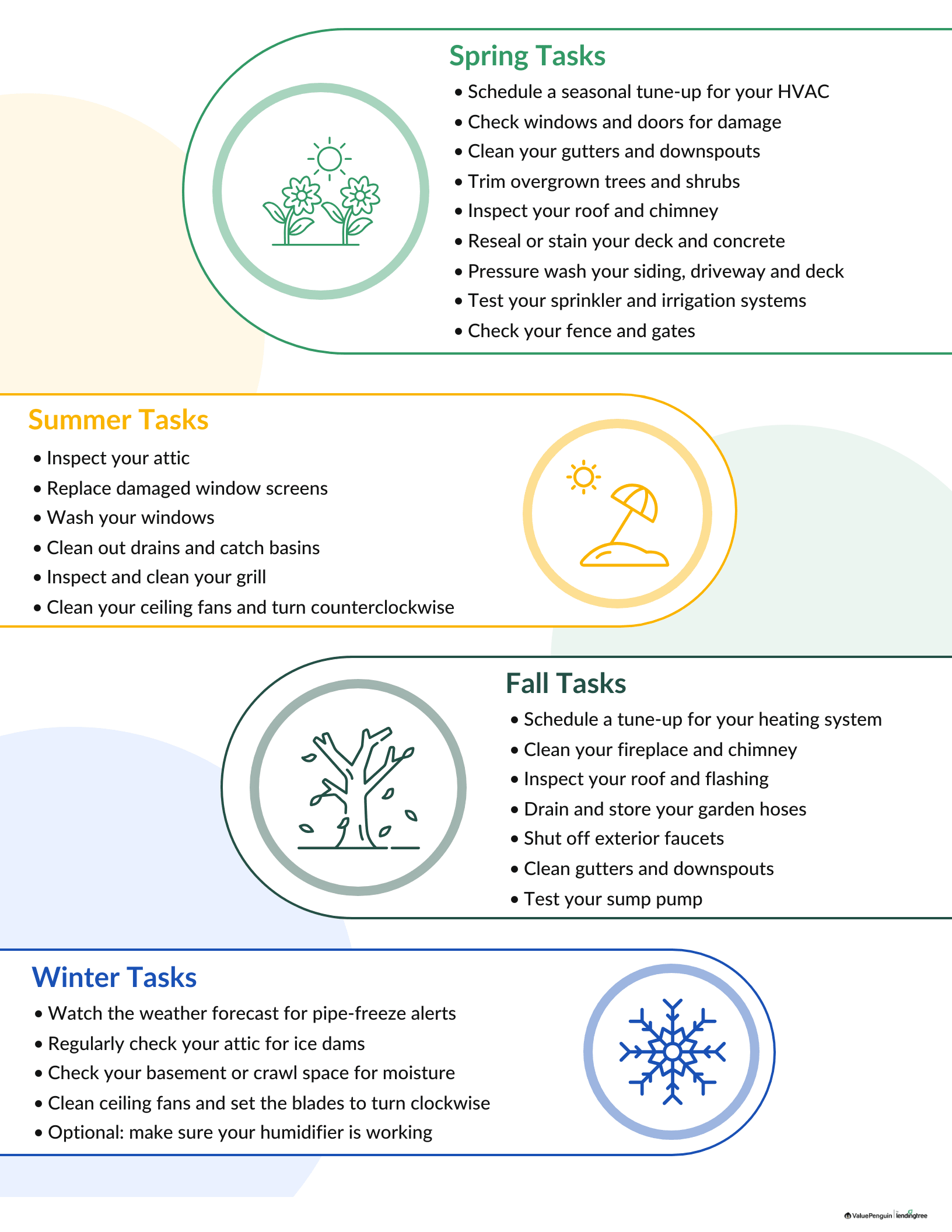
Seasonal home maintenance checklist
Each season brings different challenges that you can prepare for by doing some preventive home maintenance.
For example, summer storms can cause water damage, so it's important to check your roof and gutters and make sure there's no water pooling around your foundation before the rainy season begins.
Spring home maintenance checklist
Spring maintenance tasks are all about fixing any winter damage and getting ready for the hot, wet months ahead. Doing some basic upkeep will help get your outdoor space ready for summer and make sure your home stays cool.
Interior maintenance
Exterior maintenance
Summer home maintenance checklist
The summer heat can make outdoor home maintenance difficult. But it's important to keep your gutters clean and check your attic for leaks to prevent storms from causing water damage.
Interior maintenance
Exterior maintenance
Fall home maintenance checklist
In the fall, you should focus on getting your home ready for the harsh winter weather ahead. Proper upkeep during the fall will help keep your home dry and warm when temperatures drop in the coming months.
Interior maintenance
Exterior maintenance
Winter home maintenance checklist
The key to winter home maintenance is protecting your home from freezing temperatures. Even in warmer climates, you should always keep an eye on your local weather forecast so you can properly prepare for freezing overnight temperatures.
Annual home maintenance checklist
There are several things you should do each year to maintain your home and avoid major repair bills.
Homeowner maintenance tips by region
Some areas of the country require extra attention when it comes to home maintenance. For example, people in the Southeast and Gulf Coast areas should take special steps to prepare their homes for hurricane season.
Home upkeep checklist for wildfire-prone areas
If you live somewhere with a high risk of wildfires, such as California or Colorado, you should take extra steps to protect your home.
Before the start of the wildfire season in late spring to early summer:
- Remove dead bushes and trees within 30 feet of your home.
- Clean your gutters and roof valleys often during wildfire season.
- Install ember-resistant vent covers, which prevent embers from entering your attic or crawl space.
- Seal attic and basement access points to prevent embers from entering your home.
- Regularly check wood trim or siding for dry rot and cracks.
- Inspect caulking around windows and doors often, as the desert's high UV exposure can break down seals quickly.
- Flush evaporative swamp coolers seasonally and replace pads to prevent mineral buildup.
- Rewater drip lines monthly to prevent soil clogs.

Home service checklist for hurricane zones
People living in the coastal Southeast or Gulf Coast regions should take extra steps to protect their homes from hurricane damage.
Before the Atlantic hurricane season starts on June 1, you should:
- Test your storm shutters and replace any damaged shutters or broken hardware.
- Check plywood window coverings and replace any damaged or rotten wood.
- Seal roof-to-wall connections with hurricane clips or straps.
- Remove any dead trees or limbs from your property.
- Check for loose shingles, siding and fencing, which can be easily blown away by storms.
- Replenish your emergency supplies, such as sandbags, batteries, nonperishable food and water.
- Test your generator, if you have one.
- Inspect HVAC units, window hardware and exterior fasteners for salt corrosion.
- Wash windows and siding frequently to remove salt deposits, which can etch glass and damage paint.
- Check for rust on garage doors, gates and fences.
- Seal wood surfaces annually to prevent salt and moisture damage.
- Look for mold and mildew in shaded exterior areas, such as siding, patios and soffits.

House maintenance list for extreme cold regions
Extreme cold can cause severe damage to homes in the Northeast and Midwest.
Before winter's freezing temperatures hit, you should prepare your home by:
- Adding extra insulation to exposed pipes in garages and crawl spaces to prevent freezing.
- Cleaning roof valleys and installing heating cables or roof rakes to prevent ice dams that can cause leaks.
- Raking snow off the roof after heavy storms to prevent your roof from collapsing under the weight of the snow.
- Testing your generator or backup heat source.
Home maintenance tips for new homeowners
New homeowners may feel overwhelmed by the amount of work it takes to maintain a home. After all, you're probably used to having a landlord who's responsible for most of the upkeep.
Along with following a home maintenance checklist, new homeowners should:
Budget for routine maintenance costs
Homeowners spend about $500 per year on maintenance. However, home upkeep costs vary depending on the size and age of your home, its building materials and where you live.
For example, people who own homes with 1,000 to 1,499 square feet of living space spend about $500 per year on upkeep. But that number increases to $850 per year for homes 2,500 to 2,999 square feet.
Start an emergency fund
As a new homeowner, you should start an emergency fund that's separate from your regular savings to help cover unforeseen home maintenance costs.
This should help you pay for items above and beyond your standard annual maintenance costs, such as a new roof or water heater. A new roof costs an average of $11,601, so it's important to have money set aside in case something happens that's not covered by insurance.
Cost to replace common household fixtures
- Roof: $11,610
- Siding: $8,990
- Porch, deck or patio: $8,860
- Septic tank: $7,945
- HVAC unit: $6,836
- Windows and doors: $5,914
- Water pipes: $2,911
- Electrical wiring, fuse boxes or breaker switches: $2,907
- Water heater, dishwasher or garbage disposal: $1,148
Follow a maintenance schedule
Creating checklists for monthly, seasonal and yearly maintenance items can help you stay ahead of problems and extend the life of many items in your home, such as your appliances and siding. You can use ValuePenguin's free home maintenance checklist PDF as a starting point.
Save receipts from repairs and upgrades
Keep a file with hard copies of receipts or invoices for any maintenance, repairs or upgrades to your home. These can come in handy in the future if:
- Something in your home breaks and your insurance or home warranty requires proof that you've been keeping up with regular maintenance.
- You replace your roof and need to show your insurance company proof to get a lower rate.
- You're selling your home and you need to show the buyer proof that you recently replaced the hot water heater.
Know what your home insurance policy covers
When it comes to maintenance, home insurance doesn't pay for damage from normal wear and tear.
So you shouldn't expect insurance to help cover the cost of work such as replacing old pipes or refinishing your deck.
In addition, home insurance won't cover damage caused by something you neglected to fix.
For example, say a tree next to your home has been dead for six months and a storm blows it over onto your home. Your insurance company probably won't pay to fix it because you should have had the dead tree removed before it caused a problem.
Consider a home warranty policy
If you're buying an older home or concerned about the amount of life left in your appliances, you should consider a home warranty. Home warranties help replace things such as a broken refrigerator or HVAC system.
Some home warranty companies can be difficult to work with, so make sure you do your research before spending money on a policy. However, it's common for homebuyers to ask the seller to include one year of home warranty coverage. This gives you some extra protection in case a major appliance, such as your dishwasher, breaks just after you move in.
Use smart tech to stay on top of home maintenance
There are a number of ways smart technology can help you keep up with home maintenance and avoid major repairs.
- Use a smart thermostat to optimize energy efficiency and get alerts about HVAC issues.
- Automate HVAC filter deliveries using subscription services. This task is harder to forget when you have filters delivered straight to your door.
- Install leak detectors under your sinks and near water heaters, so you can catch leaks before they become a major issue.
- There are a number of home maintenance apps that can send you reminders. Or you can set reminders or recurring to-dos using your phone calendar.
Frequently asked questions
How much should I budget for home maintenance each year?
Homeowners spend around $500 per year on regular maintenance, according to the U.S. Census American Housing Survey. However, that number could be higher if you have an older or larger home, or you live in an area that's prone to wildfires, hurricanes or very cold winters.
Does homeowners insurance cover damage from a lack of maintenance?
No, home insurance doesn't cover damage if you neglect to maintain your home. For example, say you notice your roof is missing some shingles but decide not to fix it. If it starts to leak down the road, your insurance company won't pay for repairs if they find out you knew about the damage and didn't do anything.
What home maintenance tasks should you do monthly?
Each month, you should clean or replace your air filters, vents and registers, test smoke alarms, carbon monoxide detectors and fire extinguishers, clean your garbage disposal, range hood filter, faucet aerators and shower heads, and check for visible plumbing leaks.
Sources
The costs of routine maintenance and repairs are from the U.S. Census American Housing Survey.
About the Author

Senior Writer
Lindsay Bishop is a Senior Writer at ValuePenguin, where she educates readers about home, auto, renters, flood and motorcycle insurance.
Lindsay began her career in the insurance and financial industry in 2010. She was a licensed auto, home, life and health insurance agent and held Series 6 and 63 financial licenses.
After a hiatus from the financial sector, Lindsay returned to the industry as a content writer for ValuePenguin in 2021. She enjoys having the opportunity to help readers make smart decisions about their insurance so they can be prepared for anything life throws their way.
When Lindsay isn't writing about insurance, you can find her spending time with family, enjoying the outdoors on Sunday long runs or riding her Peloton.
How insurance helped Lindsay
As a homeowner for 15 years located in South Carolina, Lindsay has plenty of experience navigating the coastal insurance market and managing the claims process. That includes successfully negotiating a full roof replacement claim.
Expertise
- Home insurance
- Car insurance
- Flood insurance
- Renters insurance
- Motorcycle insurance
Referenced by
- CNBC
- Yahoo Finance
- Miami Herald
Education
- BS/BA Economics, University of Nevada Las Vegas
Editorial Note: The content of this article is based on the author's opinions and recommendations alone. It has not been previewed, commissioned or otherwise endorsed by any of our network partners.
